Average Car Insurance Cost in Florida by City
Florida is the single most expensive state to insure a car, and your city can swing the bill by hundreds a year. We show what seven major Florida cities actually pay, with cited 2026 data, why the gaps are so wide, and how to pay less wherever you live.

Eddie Ezekiel
Published Dec 1, 2025 · 6 min read
Updated Aug 24, 2026

Image credit: Photo by Jorge Romero // Pexels
Florida is the most expensive state in the country to insure a car, and it is not close. In Bankrate's latest analysis, the average full-coverage premium in Florida runs about $4,171 a year, roughly 58 percent above the national average. But that statewide figure hides a second gap that matters just as much: where you park the car. Two drivers with identical records can pay hundreds of dollars a year apart simply because one lives in Tampa and the other in Tallahassee. Below, we lay out what major Florida cities actually pay, using cited 2026 data, why the spread is so wide, and the levers that move your own rate more than your ZIP code does.
Florida is the most expensive state, period
That is about 58 percent higher than the national average of roughly $2,638 for full coverage. Even bare-bones state-minimum coverage costs Florida drivers around $1,118 a year, against a national average near $800. In other words, before you factor in your city, your car, or your record, living in Florida already puts you near the top of the national table. The reasons are structural, and we come back to them below.
What the major cities pay
The table below uses MoneyGeek's 2026 city data, which holds the driver constant so the cities are comparable: a 40-year-old with a clean record and good credit, carrying 100/300/100 liability and a $1,000 deductible. Because that is a low-risk profile, these numbers run below Bankrate's all-driver average, which is exactly the point. They isolate the effect of the city itself.
| City | Full coverage / year | Per month |
|---|---|---|
| Tampa | $3,780 | $315 |
| Miami | $3,780 | $315 |
| Fort Lauderdale | $3,756 | $313 |
| St. Petersburg | $2,928 | $244 |
| Orlando | $2,724 | $227 |
| Jacksonville | $2,544 | $212 |
| Tallahassee | $2,232 | $186 |
| Florida average | $2,431 | $203 |
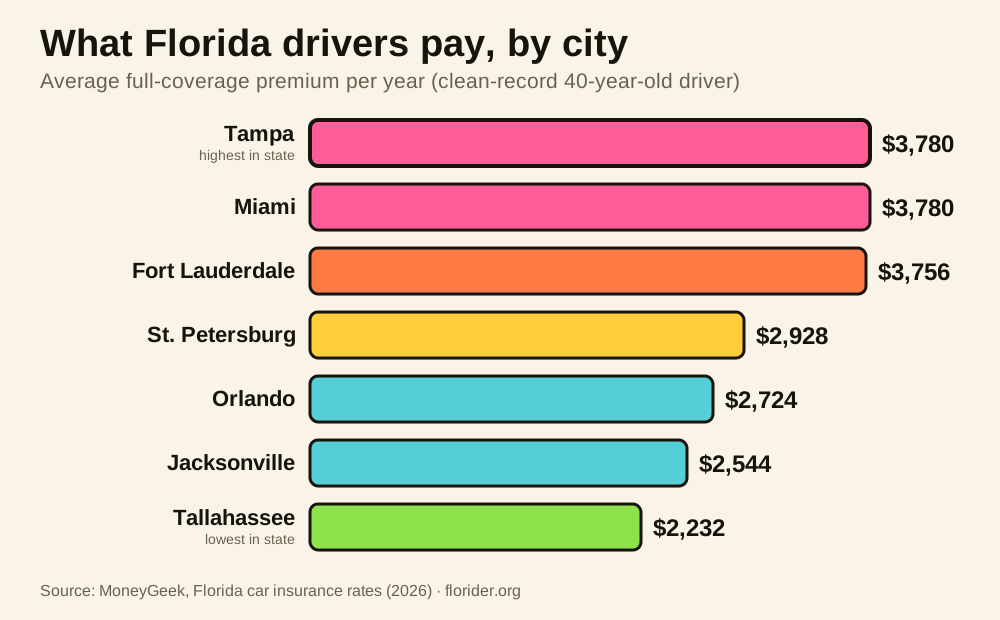
Image credit: FloRider, data from MoneyGeek (2026)
Why the gap between cities is so wide
Insurers rate by ZIP code, so your street matters before your driving does. Within Florida, a handful of local forces drive the spread you see above:
- Density and traffic. More cars packed together means more fender-benders and more expensive claims. Dense South Florida and the Tampa Bay metro sit at the top for this reason.
- Theft and vandalism. Higher local vehicle-theft and break-in rates feed straight into comprehensive premiums.
- Litigation and fraud pockets. South Florida has long been a hotspot for staged-accident and inflated-claim activity, which pushes rates up for everyone in those ZIP codes.
- Catastrophe and flood exposure. Coastal and low-lying areas carry more hurricane and flood risk, which lifts the comprehensive side of the bill.
- Repair and labor costs. Body-shop and parts prices vary by metro, and pricier repairs mean pricier claims.
Why the whole state runs high
Even the cheapest Florida city still outpaces much of the country. That is a statewide tax on every driver, and it comes from a stack of factors:
- No-fault and required PIP. Florida makes every driver carry personal injury protection, a coverage most states do not mandate.
- Uninsured drivers. Roughly one in five Florida drivers carries no insurance, among the worst rates in the nation, and everyone else's premiums absorb that risk. We break the numbers down in what the uninsured data shows.
- Litigation and claims history. A long record of insurance litigation and fraud raises the baseline cost of doing business in the state.
- Hurricanes and severe weather. Catastrophe seasons drive large waves of comprehensive claims and push up the reinsurance that carriers must buy.
- Rising repair costs. Newer cars packed with sensors and cameras cost far more to fix after even a minor crash.
What moves YOUR rate more than your city
The city sets a floor, but personal factors can swing your premium further than a move across town. In rough order of impact:
- Driving record. Tickets, at-fault crashes, and especially a DUI can dwarf any geographic difference.
- Credit. Florida lets insurers use credit-based insurance scores, and the gap between excellent and poor credit can be hundreds of dollars a year.
- Your vehicle. Value, repair cost, theft rate, and safety features all feed the price.
- Age and experience. Teen and very young drivers pay a steep premium; rates ease with a clean record over time.
- Coverage and deductible choices. Higher deductibles and dropping optional coverages lower the premium, at the cost of more risk on you.
How to pay less wherever you live
- Compare several insurers at identical limits before every renewal. This is the single biggest lever in Florida.
- Raise your deductible if you have the savings to cover it out of pocket.
- Bundle auto with renters or homeowners where the combined price actually beats standalone.
- Ask for every discount you qualify for: safe driver, low mileage, paid-in-full, autopay, and telematics if you drive carefully.
- Fix your credit over time, since in Florida it directly affects your rate.
- Reconsider full coverage on an older car whose value no longer justifies comp and collision.
Frequently asked questions
Which Florida city has the cheapest car insurance?
Why is my Florida rate higher than these averages?
Does moving a few miles really change my premium?
Is full coverage worth it in an expensive city?
Your city sets the baseline, and in Florida that baseline is already the highest in the country. But your record, vehicle, credit, and willingness to shop set the rest, and those are the parts you control. Wherever you live in the state, the move that saves the most money is the simplest one: compare several quotes at matching coverage, every single year.
Last updated: Aug 24, 2026
Sources & references
We cite Florida statutes, the FLHSMV, and industry bodies like the Insurance Information Institute. How we research and maintain these guides. Spotted an error? Tell us.
About the author
Eddie Ezekiel
Eddie Ezekiel is a product and data specialist who builds digital tools for the insurance industry, including the website of Golden Eagle, an established insurance and financial-services firm. He founded FloRider to translate Florida's confusing car-insurance rules into plain English, with every claim traced back to primary sources like the FLHSMV.
Related reads

The 5-Year True Cost of Owning a Car in Florida
A car costs far more than its sticker price. Over five years in Florida, insurance is nearly the single biggest cost of ownership, rivaling depreciation. We break down where the money actually goes, and the one big cost you can actually cut.
The Cheapest and Most Expensive Cars to Insure in Florida
The car you choose can quadruple your insurance bill. We show the cheapest and most expensive vehicles to insure, with cited 2025 numbers, why the gap is so wide, and how much extra Florida drivers pay on top.
The Real Cost of Driving Uninsured in Florida
Skipping car insurance in Florida to save money is a trap. Getting caught suspends your license and triggers an expensive FR-44; crashing uninsured adds personal liability and a lawsuit. We add up what it really costs, both ways.