What Your Credit Score Costs You on Florida Car Insurance
In Florida, credit can swing your car insurance more than almost anything else. A poor-credit driver pays about 138% more than one with excellent credit. We show the real numbers, why insurers do it, and how to lower your rate.

Eddie Ezekiel
Published Sep 7, 2026 · 3 min read
Updated Sep 7, 2026

Image credit: Photo by Mikhail Nilov on Pexels
Most Florida drivers know a ticket or an accident raises their rate. Far fewer realize that their credit can move the premium even more. Florida is one of the states that lets insurers price on a credit-based insurance score, and the gap between the top and bottom tiers is enormous: a driver with poor credit pays roughly 138% more than one with excellent credit for the same coverage. Below, we show the real numbers, explain why insurers do this, and lay out how to bring your rate down by improving the credit they look at.
What credit actually costs in Florida
The tiers below use carinsurance.com's Florida full-coverage data, holding everything but credit constant. The jump from average to poor credit is steeper than the penalty for many at-fault accidents.
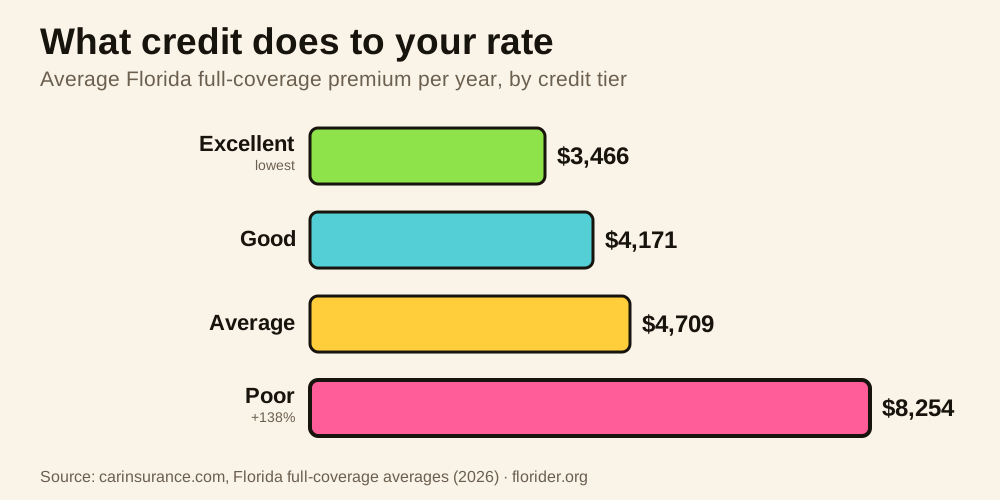
Image credit: FloRider, data from carinsurance.com
Why insurers use your credit at all
It feels unfair, but there is a statistical reason. Insurers have found that credit history correlates with how likely someone is to file a claim, so they use it to predict risk and price accordingly. Florida permits this, which is why credit sits alongside your record, car, and ZIP code as a major rating factor. A handful of states (including California, Hawaii, Massachusetts, and Michigan) ban or heavily restrict the practice, but Florida is not one of them.
It's not exactly your regular credit score
Insurers do not use your FICO score directly. They use a credit-based insurance score, which draws on similar data (payment history, how much of your available credit you use, length of history, and recent applications) but is weighted for predicting insurance claims rather than loan default. The practical upside is that the same habits that build a good credit score also build a good insurance score, so the fixes overlap.
How to lower your rate through credit
- Pay every bill on time. Payment history is the biggest single factor.
- Lower your credit utilization, the share of available credit you are using, by paying down balances.
- Dispute errors on your credit reports, which can drag your score down unfairly.
- Keep old accounts open, since length of history helps.
- Avoid a flurry of new applications right before you shop for insurance.
What if your credit is poor right now?
- Shop insurers that weight credit less. Companies price credit differently, so the cheapest carrier for good credit may not be cheapest for poor credit.
- Consider usage-based or telematics programs, which let safe driving offset part of the credit penalty.
- Raise your deductible if you can cover it, to lower the base premium.
- Bundle auto with renters or homeowners where it helps.
- Work the credit fixes above and re-shop as your score recovers.
Frequently asked questions
Does Florida let insurers use credit scores?
How much does bad credit raise car insurance in Florida?
Is the insurance credit score the same as my FICO score?
How do I lower my insurance if my credit is poor?
In Florida, credit is one of the biggest and least-understood levers on your car insurance bill. The difference between excellent and poor credit is thousands of dollars a year, more than many violations cost. You cannot change it overnight, but paying on time, lowering utilization, fixing errors, and then re-shopping as your score improves is one of the most effective ways to cut a Florida premium over time.
Last updated: Sep 7, 2026
Sources & references
We cite Florida statutes, the FLHSMV, and industry bodies like the Insurance Information Institute. How we research and maintain these guides. Spotted an error? Tell us.
About the author
Eddie Ezekiel
Eddie Ezekiel is a product and data specialist who builds digital tools for the insurance industry, including the website of Golden Eagle, an established insurance and financial-services firm. He founded FloRider to translate Florida's confusing car-insurance rules into plain English, with every claim traced back to primary sources like the FLHSMV.
Related reads

The 5-Year True Cost of Owning a Car in Florida
A car costs far more than its sticker price. Over five years in Florida, insurance is nearly the single biggest cost of ownership, rivaling depreciation. We break down where the money actually goes, and the one big cost you can actually cut.

The Cheapest and Most Expensive Cars to Insure in Florida
The car you choose can quadruple your insurance bill. We show the cheapest and most expensive vehicles to insure, with cited 2025 numbers, why the gap is so wide, and how much extra Florida drivers pay on top.
The Real Cost of Driving Uninsured in Florida
Skipping car insurance in Florida to save money is a trap. Getting caught suspends your license and triggers an expensive FR-44; crashing uninsured adds personal liability and a lawsuit. We add up what it really costs, both ways.